Thermal Mass Flow
FP-210Gear Flow Meter
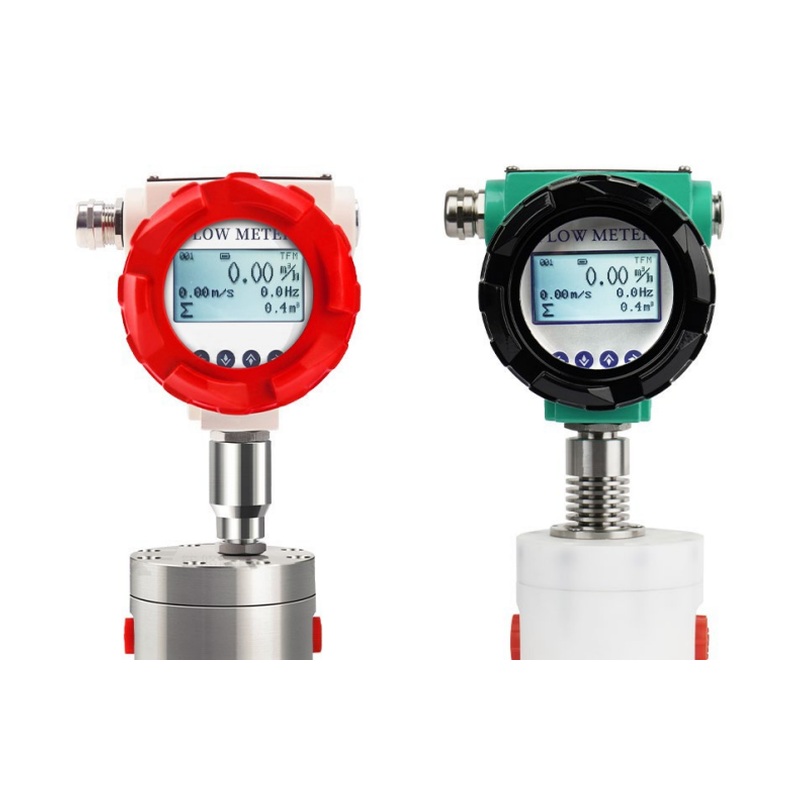
The FP-210 is a gear flow meter for liquid measurement across a very wide viscosity range. High-pressure and corrosion-resistant material options, high resolution and multiple communication outputs support demanding dosing and process applications.
Technical overview
Published configuration data
Values below describe catalog or typical configurations. The confirmed quotation and model code define the supplied specification.
- Flow coverage
- 0.3-20,000 L/h by model
- Viscosity
- 0.5-2,000,000 cP
- Accuracy
- ±0.5% of reading within 1:20 range
- Temperature
- -40 to 80°C; custom to 200°C
- Pressure
- 50 bar aluminum / 100 bar stainless steel
- Protection
- IP65
Key characteristics
Why engineers consider FP-210
- High-viscosity liquid measurement
- High pressure options
- Wide 1:150 turndown
- HART, Modbus, GPRS and Bluetooth options
Typical applications
Where it fits
- 01Resins and adhesives
- 02Oils and fuels
- 03Corrosive-liquid dosing
- 04High-pressure process skids
Selection checklist
Confirm these conditions before ordering.
Sending this information helps CurioSens verify the measurement principle, materials, range and interface.
- 01Process medium and composition
- 02Minimum, normal and maximum flow
- 03Operating pressure and temperature
- 04Pipe or tube size and process connection
- 05Required accuracy and response time
- 06Output, power supply and communication interface
Engineer-reviewed FAQ
Questions about FP-210
Application answers reviewed for compatibility, selection, installation and maintenance.
How do I select the right flow meter for low-flow industrial liquid applications?+
Selecting a low-flow liquid meter requires matching sensor technology with fluid physical properties and piping constraints. For clean water-based fluids, the FS-910 inline ultrasonic meter offers non-contact measurement down to 120 ml/min. For highly viscous fluids such as syrup or fuel oils, the FP-210 gear meter provides high repeatability across 0.3 to 20000 L/h. Conductive liquids can utilize the FS-510 electromagnetic flowmeter featuring a PEEK lining and 316L electrodes up to 6.3 MPa. However, flow performance varies under extreme process conditions, so this must be confirmed for the selected configuration. To receive a precise recommendation, please provide your medium, flow range, pressure, temperature, viscosity, tube size, process connection, and required output to our technical engineering team.
selectionHow does fluid viscosity affect the choice between a gear flow meter and an ultrasonic flow meter?+
Fluid viscosity significantly impacts flow sensor mechanics and sound propagation. Gear flow meters like the FP-210 operate on positive displacement principles, where rotating gears maintain reading accuracy of +/-0.5% in viscous media such as syrups, honey, and asphalt up to 2x10^6 mm2/s. Conversely, transit-time ultrasonic meters like the FS-910 require ultrasonic wave transmission through the fluid, operating reliably when liquid viscosity remains below 300 cSt. Highly viscous fluids can attenuate ultrasonic signals or increase differential pressure in gear chambers. Because extreme viscosity shifts alter calibration curves, performance must be confirmed for the selected configuration. Contact us with your medium, flow range, pressure, temperature, viscosity, tube size, process connection, and required output.
comparisonHow do I select low-flow meters for dosing aggressive acids and bases in chemical processing?+
Dosing aggressive chemicals requires careful matching of wetted materials against acid or base reactivity. For highly corrosive or non-conductive reagents, the FP-210 positive displacement gear meter offers a PTFE body option with 316L or alloy gears, measuring flows from 0.3 L/h to 20,000 L/h under pressures up to 50 bar. For clean aqueous chemicals, the FS-920 ultrasonic flow meter provides an injection-molded UPVC body with quick-connect union fittings for lines up to OD40 (DN32). Conductive acid lines can utilize the FS-510 electromagnetic flowmeter with PEEK lining. Chemical resistance under elevated temperatures must be confirmed for the selected configuration. Send your medium, flow range, pressure, temperature, viscosity, tube size, process connection, and required output to our team.
selectionRelated instruments