Process Sensors
AS6800Polarographic Oxygen Electrode
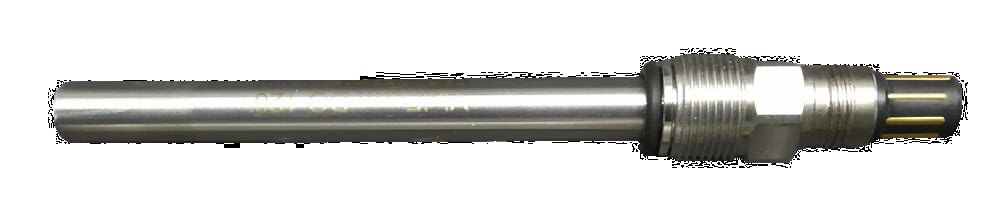
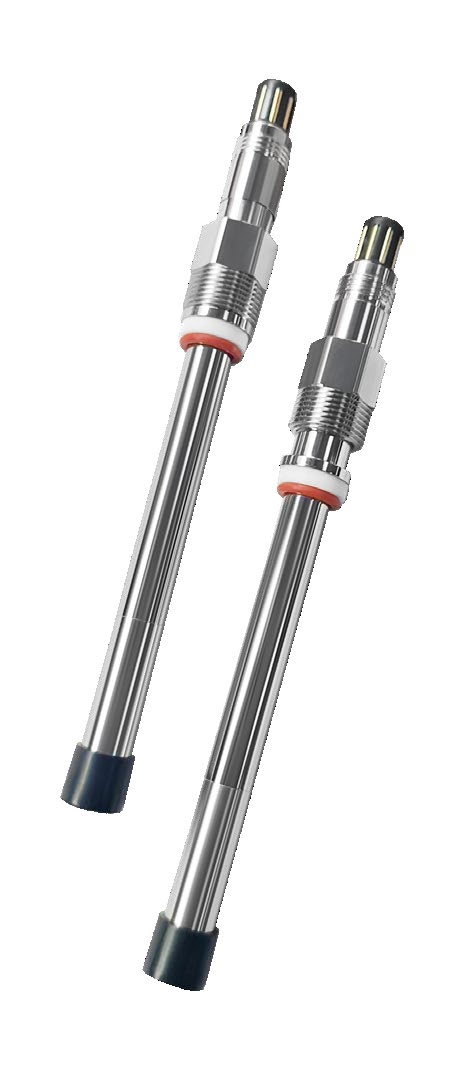
The AS6800 is a polarographic dissolved oxygen electrode with a 316L hygienic body and reinforced membrane head. It is designed for fermentation measurement and sterilization conditions up to 135°C at 1.5 bar.
Technical overview
Published configuration data
Values below describe catalog or typical configurations. The confirmed quotation and model code define the supplied specification.
- Range
- 8 ppb to saturation
- Measurement temperature
- 0-80°C
- Sterilization
- Up to 135°C at 1.5 bar
- Pressure
- 0.2-6 bar
- Body
- 316L stainless steel
- Surface
- Ra below 0.4 µm
Key characteristics
Why engineers consider AS6800
- Reinforced membrane head
- 316L hygienic construction
- Multiple insertion lengths
- Fermentation-focused design
Typical applications
Where it fits
- 01Fermentation
- 02Bioreactors
- 03Hygienic vessels
- 04Bioprocess skids
Selection checklist
Confirm these conditions before ordering.
Sending this information helps CurioSens verify the measurement principle, materials, range and interface.
- 01Process medium and composition
- 02Minimum, normal and maximum measuring range
- 03Operating and sterilization temperature
- 04Operating pressure and pressure peaks
- 05Pipe or tube size and process connection
- 06Required output, power supply and control interface
Engineer-reviewed FAQ
Questions about AS6800
Application answers reviewed for compatibility, selection, installation and maintenance.
How do high process temperatures impact the selection of pH, DO, and conductivity sensors?+
High operating temperatures degrade standard analytical sensors by softening seals, increasing reference electrolyte diffusion, and damaging glass membranes. The AS3250 pH electrode utilizes special high-temperature gel formulations and 400 Mohm glass impedance to withstand steam sterilization up to 130°C. The AS6800 polarographic DO sensor features a 316L body and reinforced steel mesh membrane head rated for 135°C sterilization at 1.5 bar. For conductivity, PEEK-molded AS7250 inductive sensors operate up to 150°C and 12 bar. Automatic temperature compensation must be configured in paired transmitters. Since combined high temperature and chemical aggressiveness reduce lifespan, performance must be confirmed for the selected configuration. Send us your medium, flow range, pressure, temperature, viscosity, tube size, process connection, and required output.
compatibilityOptical vs polarographic dissolved oxygen sensor: which technology is better for fermentation?+
Choosing between optical and polarographic DO sensors depends on maintenance budgets and operating workflow. The AS6860i optical DO sensor uses Swiss fluorescence quenching technology to deliver instant plug-and-play measurement from 20 ppb to saturation without consuming dissolved oxygen or requiring polarization. It features an IP68 316L body, RS485 Modbus RTU, and 4-20mA outputs. The AS6800 polarographic electrode operates from 8 ppb to saturation, providing reliable electrochemical measurement but requiring a polarization period and periodic electrolyte/membrane cap maintenance. Both sensors withstand SIP sterilization at 135°C (1.5 bar). Specific media chemical compatibility must be confirmed for the selected configuration. Please submit your medium, flow range, pressure, temperature, viscosity, tube size, process connection, and required output.
comparisonWhat sterilization and operating temperature limits apply to the AS6800 polarographic oxygen electrode?+
The AS6800 polarographic oxygen electrode is constructed for biopharmaceutical vessels and culture fermenters requiring clean-in-place and steam sterilization cycles. It features a 316L stainless steel body with a hygienic polished surface (Ra <= 0.4 um / N5) and an imported steel-mesh reinforced PTFE membrane cap designed to resist thermal deformation. The electrode operates continuously from 0°C to 80°C under working pressures from 0.2 to 6 kg (bar), withstanding SIP steam sterilization up to 135°C at 1.5 bar. Standard air signal output ranges from 50 to 110 nA at 25°C. Polarization voltage and transmitter setup must be confirmed for the selected configuration. Provide your medium, flow range, pressure, temperature, viscosity, tube size, process connection, and required output.
compatibilityHow long is the polarization time required before calibrating a polarographic oxygen electrode?+
Polarographic DO electrodes operate by applying a constant polarization voltage (approximately -0.6 to -0.8V) across the noble cathode and anode. When power is first applied or interrupted, time is required for the electrochemical cell to establish a stable boundary layer and constant background current. For the AS6800, polarization should continue for several hours until the output current in air stabilizes between 50 and 110 nA at 25°C. Calibrating prior to full polarization results in slope errors. In contrast, optical sensors like AS6860i require zero polarization time. Transmitter polarization voltage settings must be confirmed for the selected configuration. Provide your medium, flow range, pressure, temperature, viscosity, tube size, process connection, and required output for setup details.
maintenanceHow do fluid velocity and stirring affect polarographic versus optical DO sensors?+
Flow dependence is an inherent characteristic of electrochemical oxygen sensing. Polarographic sensors like the AS6800 continuously reduce oxygen molecules passing through the membrane cap, depleting dissolved oxygen at the cathode surface. If liquid velocity drops below a critical threshold, readings fall artificially low. Consequently, polarographic probes require constant sample flow or agitator stirring. Optical DO sensors like the AS6860i measure oxygen partial pressure via phase-shift quenching of excited luminophores without chemical consumption. As a result, optical readings remain stable in stationary fluids or variable-speed bioreactor mixing. Flow velocity conditions in flow cells must be confirmed for the selected configuration. Send your medium, flow range, pressure, temperature, viscosity, tube size, process connection, and required output.
comparisonRelated instruments