Process Sensors
AS6860iOptical Dissolved Oxygen Sensor
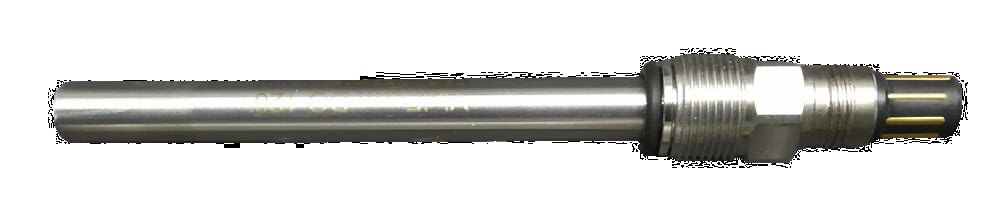
The AS6860i uses fluorescence quenching to measure dissolved oxygen in fermentation and hygienic processes. It requires no electrolyte or polarization and provides RS485 Modbus RTU plus 4-20 mA output for direct integration.
Technical overview
Published configuration data
Values below describe catalog or typical configurations. The confirmed quotation and model code define the supplied specification.
- Range
- 20 ppb to saturation
- Measurement temperature
- 0-50°C
- Sterilization
- Up to 135°C at 1.5 bar
- Pressure
- 0-6 bar
- Output
- RS485 Modbus RTU + 4-20 mA
- Wetted materials
- 316L / EPDM
Key characteristics
Why engineers consider AS6860i
- No electrolyte
- No polarization
- Ra below 0.4 µm finish
- FDA and USP Class VI wetted materials
Typical applications
Where it fits
- 01Bioreactors
- 02Fermentation
- 03Cell culture
- 04Hygienic process monitoring
Selection checklist
Confirm these conditions before ordering.
Sending this information helps CurioSens verify the measurement principle, materials, range and interface.
- 01Process medium and composition
- 02Minimum, normal and maximum measuring range
- 03Operating and sterilization temperature
- 04Operating pressure and pressure peaks
- 05Pipe or tube size and process connection
- 06Required output, power supply and control interface
Engineer-reviewed FAQ
Questions about AS6860i
Application answers reviewed for compatibility, selection, installation and maintenance.
What sensor maintenance factors should be evaluated before purchasing online liquid analyzers?+
Evaluating long-term maintenance costs is vital when choosing liquid analytical sensors. Traditional liquid-filled or gel pH sensors experience electrolyte depletion over time, whereas models like the AS3250 utilize silver ion traps and pressurized reference systems to minimize drift during steam sterilization. Optical dissolved oxygen sensors like the AS6860i eliminate polarographic electrolyte refilling and membrane cap replacements entirely. For conductivity, electrodeless inductive sensors like the AS7250 remove polarization and electrode fouling in dirty fluids. Because maintenance intervals depend on process chemical exposure and CIP cycles, exact maintenance schedules must be confirmed for the selected configuration. Provide your medium, flow range, pressure, temperature, viscosity, tube size, process connection, and required output.
maintenanceOptical vs polarographic dissolved oxygen sensor: which technology is better for fermentation?+
Choosing between optical and polarographic DO sensors depends on maintenance budgets and operating workflow. The AS6860i optical DO sensor uses Swiss fluorescence quenching technology to deliver instant plug-and-play measurement from 20 ppb to saturation without consuming dissolved oxygen or requiring polarization. It features an IP68 316L body, RS485 Modbus RTU, and 4-20mA outputs. The AS6800 polarographic electrode operates from 8 ppb to saturation, providing reliable electrochemical measurement but requiring a polarization period and periodic electrolyte/membrane cap maintenance. Both sensors withstand SIP sterilization at 135°C (1.5 bar). Specific media chemical compatibility must be confirmed for the selected configuration. Please submit your medium, flow range, pressure, temperature, viscosity, tube size, process connection, and required output.
comparisonDoes the AS6860i optical dissolved oxygen sensor require polarization or electrolyte replacement?+
Traditional electrochemical DO sensors require hours of electrical polarization before calibration, alongside regular filling solution changes and fragile membrane cap replacements. The AS6860i fluorescence method optical DO sensor eliminates these steps entirely. Because light emission and phase-shift sensing consume no oxygen, the sensor operates without sample flow dependence or electrolyte solutions. It provides plug-and-play operation with rapid response during every fermentation batch, featuring RS485 Modbus RTU and 4-20mA outputs directly from the sensor. Operating pressure is rated up to 6 bar, with SIP sterilization tolerance up to 135°C. Optical sensing cap replacement intervals under frequent SIP must be confirmed for the selected configuration. Contact us with your medium, flow range, pressure, temperature, viscosity, tube size, process connection, and required output.
maintenanceWhat hygienic standards do the wetted materials of AS6860i optical DO sensors comply with?+
In biopharmaceutical, food, and beverage processes, sensor wetted materials must comply with sanitary regulatory standards to prevent leaching and bio-fouling. The AS6860i optical DO sensor features a main body constructed from 316L stainless steel with a hygienic surface roughness of Ra <= 0.4 um (N5), preventing cellular attachment. All elastomeric seals utilize FDA-compliant and USP Class VI certified EPDM O-rings. The sensor connects via PG13.5 process threads and VP8 cable connectors, operating on 24VDC power (<1W). While materials meet USP Class VI, specific CIP cleaning agent compatibility must be confirmed for the selected configuration. Send your medium, flow range, pressure, temperature, viscosity, tube size, process connection, and required output to verify compliance.
compatibilityWhat signal output options are provided directly on the AS6860i smart DO sensor?+
Unlike traditional analog DO electrodes that require external transmitter processing, the AS6860i is a smart digital sensor with built-in signal conditioning. It outputs RS485 Modbus RTU digital signals and an isolated 4-20mA current loop directly from the sensor body, enabling seamless integration into PLC, DCS, or SCADA architectures. Operating on 24VDC power (<1W), it measures dissolved oxygen from 20 ppb up to saturation. Available insertion lengths include 120mm, 220mm, 320mm, and 420mm. Dual output mapping and Modbus register addresses must be confirmed for the selected configuration. Share your medium, flow range, pressure, temperature, viscosity, tube size, process connection, and required output with our technical team.
selectionWhat measurement range and detection limit can be achieved by the AS6860i optical DO sensor?+
The AS6860i fluorescence optical sensor is calibrated for wide-range dissolved oxygen tracking from trace levels up to full saturation. Its lower detection limit starts at 20 ppb (0.02 ppm), making it effective for monitoring oxygen-sensitive fermentation steps, boiler feed water, or beverage deaeration lines. The sensor operates under pressures from 0 to 6 kg (bar) and liquid temperatures from 0°C to 50°C during measurement, withstanding thermal exposure up to 135°C during SIP cycles. Output accuracy and response kinetics remain fast across the entire range. Trace ppb range calibration procedures must be confirmed for the selected configuration. Please submit your medium, flow range, pressure, temperature, viscosity, tube size, process connection, and required output.
selectionHow do fluid velocity and stirring affect polarographic versus optical DO sensors?+
Flow dependence is an inherent characteristic of electrochemical oxygen sensing. Polarographic sensors like the AS6800 continuously reduce oxygen molecules passing through the membrane cap, depleting dissolved oxygen at the cathode surface. If liquid velocity drops below a critical threshold, readings fall artificially low. Consequently, polarographic probes require constant sample flow or agitator stirring. Optical DO sensors like the AS6860i measure oxygen partial pressure via phase-shift quenching of excited luminophores without chemical consumption. As a result, optical readings remain stable in stationary fluids or variable-speed bioreactor mixing. Flow velocity conditions in flow cells must be confirmed for the selected configuration. Send your medium, flow range, pressure, temperature, viscosity, tube size, process connection, and required output.
comparisonWhich low-flow meters and liquid sensors are suited for biopharmaceutical fermentation systems?+
Biopharmaceutical fermentation demands sterile, highly repeatable process instrumentation. For pH tracking, the AS3250 electrode withstands repeated 130°C SIP cycles with its 400 Mohm glass membrane and silver ion trap. For dissolved oxygen, the AS6860i optical sensor provides zero-polarization, zero-electrolyte measurement with USP Class VI EPDM seals and 316L polished surfaces (Ra <= 0.4 um). Non-contact liquid flow monitoring on flexible single-use tubing is handled by the FS-9X clamp-on ultrasonic meter (OD 6 to 12.7mm). Transmitter integration is simplified using B Series DIN Rail units. Clean-in-place chemical resistance must be confirmed for the selected configuration. Please supply your medium, flow range, pressure, temperature, viscosity, tube size, process connection, and required output for a tailored bioprocess package.
selectionRelated instruments