Process Sensors
AS7000Pure Water Conductivity Sensor
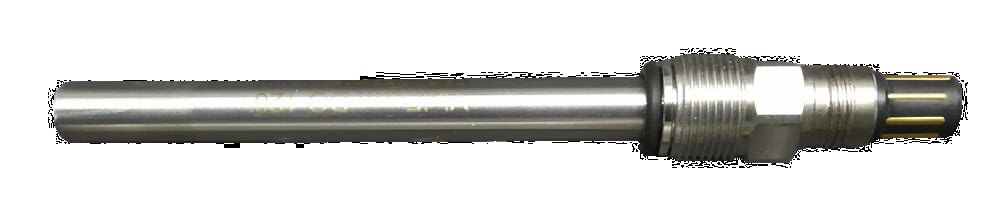
The AS7000 is a two-electrode conductivity sensor for pure-water and hygienic water applications. Internal correction points, temperature compensation and a 316L body support low-conductivity measurement in process systems.

Technical overview
Published configuration data
Values below describe catalog or typical configurations. The confirmed quotation and model code define the supplied specification.
- Range
- 0-200 or 0-2000 µS/cm
- Resolution
- 0.01 µS/cm
- Accuracy
- ±1%
- Temperature
- 0-120°C
- Pressure
- 0-6 bar at 25°C
- Protection
- IP68
Key characteristics
Why engineers consider AS7000
- 316L hygienic body
- Automatic temperature compensation
- Low-conductivity ranges
- 1.5-inch clamp format
Typical applications
Where it fits
- 01Pure water
- 02Pharmaceutical water
- 03Semiconductor utilities
- 04Hygienic process water
Selection checklist
Confirm these conditions before ordering.
Sending this information helps CurioSens verify the measurement principle, materials, range and interface.
- 01Process medium and composition
- 02Minimum, normal and maximum measuring range
- 03Operating and sterilization temperature
- 04Operating pressure and pressure peaks
- 05Pipe or tube size and process connection
- 06Required output, power supply and control interface
Engineer-reviewed FAQ
Questions about AS7000
Application answers reviewed for compatibility, selection, installation and maintenance.
Which conductivity sensor is designed specifically for ultrapure and pure water monitoring?+
Monitoring conductivity in pure water treatment and semiconductor rinse lines requires high surface cleanliness and resistance to electromagnetic interference. The AS7000 electrode utilizes a 2-pole 316L stainless steel structure with a sanitary 1.5-inch Tri-Clamp flange connection, meeting strict hygienic requirements. It includes up to 8 internal factory calibration points to ensure full-scale accuracy of +/-1% across measurement ranges of 0-200 uS/cm (K=0.01) or 0-2000 uS/cm (K=0.1) with 0.01 uS/cm resolution. Operating parameters support temperatures from 0°C to 120°C and pressures up to 6 bar at 25°C, with built-in automatic temperature compensation. Cable shielding requirements must be confirmed for the selected configuration. Submit your medium, flow range, pressure, temperature, viscosity, tube size, process connection, and required output.
selectionHow does a 4-electrode conductivity sensor prevent polarization errors in high-salinity media?+
In two-electrode conductivity sensors like the AS7000, ion accumulation at the electrode interface creates an electrical polarization resistance that acts in series with solution resistance, causing significant measurement underestimation in conductive fluids (>2 mS/cm). Four-electrode sensors like the AS7100 solve this by using two outer electrodes to pass alternating current and two inner voltage electrodes to measure potential drop across the liquid. Because virtually no current flows through the voltage-measuring circuit, contact polarization and surface fouling errors are eliminated. This enables a single 4-electrode sensor to cover wide spans from 0.02 to 500 mS/cm. Temperature compensation slope factors must be confirmed for the selected configuration. Submit your medium, flow range, pressure, temperature, viscosity, tube size, process connection, and required output.
comparisonDoes the AS7000 pure water conductivity electrode include automatic temperature compensation?+
Water conductivity is highly temperature-dependent, changing by approximately 2% to 6% per degree Celsius in pure and ultrapure water lines. The AS7000 2-pole conductivity electrode incorporates an internal precision temperature sensor to provide automatic temperature compensation (ATC) with rapid thermal response (<30 seconds). Paired CurioSens transmitters utilize specialized non-linear pure water temperature compensation algorithms to accurately normalize raw conductivity readings to 25°C standard reference values. The sensor operates under pressures up to 6 bar at 25°C with IP68 protection. Paired transmitter temperature coefficient configuration must be confirmed for the selected configuration. Please submit your medium, flow range, pressure, temperature, viscosity, tube size, process connection, and required output.
compatibilityWhat is the difference between contacting 2-electrode, 4-electrode, and inductive conductivity sensors?+
Selecting conductivity technology depends on fluid conductivity and fouling potential. 2-pole contacting sensors like the AS7000 measure current between two stainless steel electrodes, providing maximum precision in ultrapure water lines (0-2000 uS/cm). 4-electrode sensors like the AS7100 use separate drive and sense electrodes to eliminate polarization across medium-to-high ranges (0.02-500 mS/cm) in pharmaceutical buffers. Inductive toroidal sensors like the AS7250 use magnetic coils in a PEEK/PFA torus, measuring highly conductive or dirty liquids (0.05-2000 mS/cm) electrodelessly without surface fouling. Sensor cell constant matching must be confirmed for the selected configuration. Provide your medium, flow range, pressure, temperature, viscosity, tube size, process connection, and required output for recommendation.
comparisonWhat liquid flow meters and conductivity sensors are recommended for semiconductor chemical delivery?+
Semiconductor wet bench processing and chemical delivery systems require ultra-clean, corrosion-resistant measurement tools. The FS-910 inline ultrasonic flow meter provides non-contact micro-flow measurement in UPVC pipe lines down to 120 ml/min without moving parts. For ultrapure water (UPW) loop monitoring, the AS7000 2-pole stainless steel conductivity sensor provides +/-1% accuracy down to 0.01 uS/cm resolution with sanitary Tri-Clamp connections. For bulk conductive chemical lines, the FS-510 electromagnetic flow meter features a PEEK lining and 316L electrodes rated up to 6.3 MPa. High-purity PFA chemical compatibility must be confirmed for the selected configuration. Share your medium, flow range, pressure, temperature, viscosity, tube size, process connection, and required output for sizing.
selectionRelated instruments