Ultrasonic Flow
FS-920Industrial Ultrasonic Flow Meter
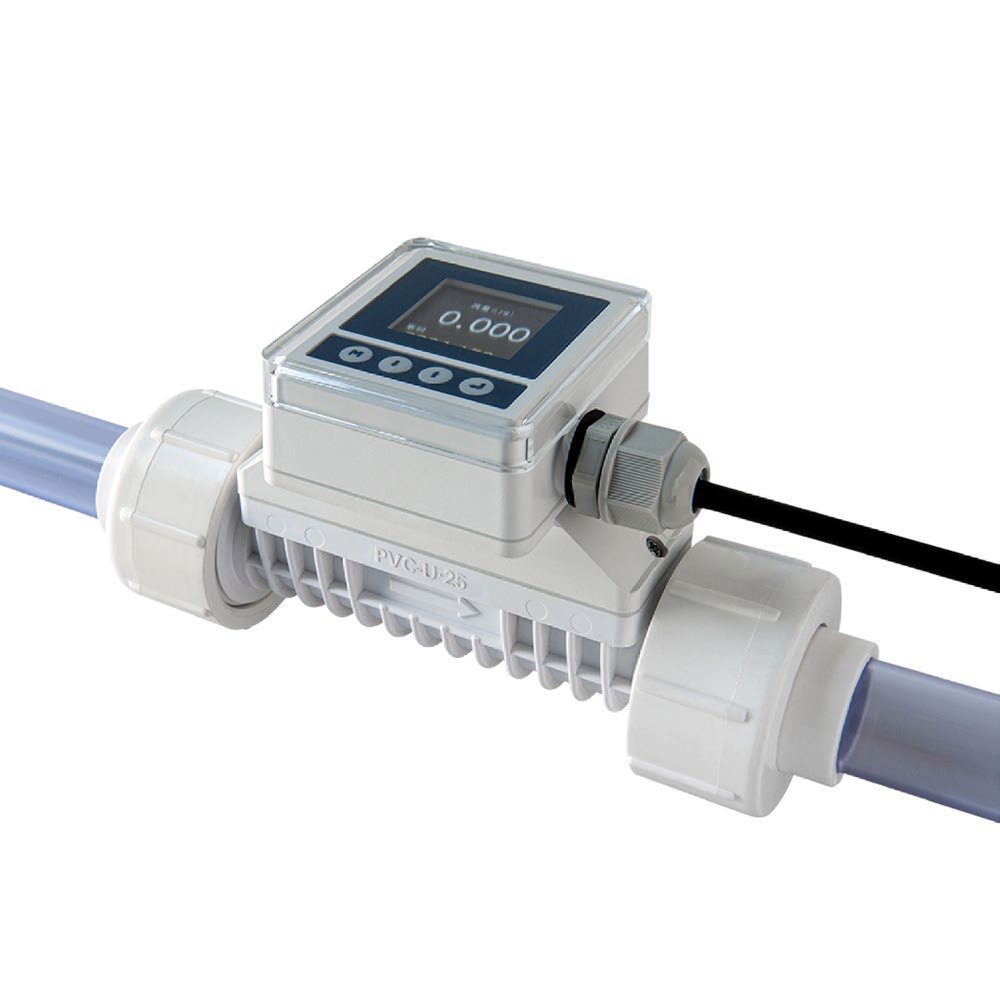
The FS-920 provides inline ultrasonic flow measurement for compatible clean liquids. Its compact industrial enclosure, local indication and control-system outputs support continuous monitoring on equipment and utility lines.
Technical overview
Published configuration data
Values below describe catalog or typical configurations. The confirmed quotation and model code define the supplied specification.
- Accuracy
- ±1.0% configuration dependent
- Response
- 500 ms
- Protection
- IP66
- Outputs
- Analog / digital options
Key characteristics
Why engineers consider FS-920
- No moving parts
- Low maintenance
- Integrated display
- Industrial enclosure
Typical applications
Where it fits
- 01Process water
- 02Machine utilities
- 03Chemical solutions
- 04Industrial skids
Selection checklist
Confirm these conditions before ordering.
Sending this information helps CurioSens verify the measurement principle, materials, range and interface.
- 01Process medium and composition
- 02Minimum, normal and maximum measuring range
- 03Operating and sterilization temperature
- 04Operating pressure and pressure peaks
- 05Pipe or tube size and process connection
- 06Required output, power supply and control interface
Engineer-reviewed FAQ
Questions about FS-920
Application answers reviewed for compatibility, selection, installation and maintenance.
What pipe sizes and fitting connections are provided on the FS-920 industrial ultrasonic meter?+
The FS-920 is an injection-molded inline ultrasonic flow meter designed for industrial water and chemical reagent distribution. Equipped with UPVC double-union connections, it allows rapid installation and reliable sealing without complex pipe threading. Four standard pipe outer diameter models are available: OD20 (0.92-70 L/min), OD25 (1.36-150 L/min), OD32 (2.71-200 L/min), and OD40 (4.24-330 L/min / 19.8 m3/h). It operates at working pressures up to 0.3 MPa and medium temperatures from 0°C to 60°C with an IP66 waterproof rating. Measurements maintain +/-1.0% accuracy across 0.1 to 5.0 m/s velocities. Chemical compatibility for suspended impurities (>4%) must be confirmed for the selected configuration. Send your medium, flow range, pressure, temperature, viscosity, tube size, process connection, and required output to verify sizing.
compatibilityWhat liquid viscosity limits apply to CurioSens transit-time ultrasonic flow meters?+
Transit-time ultrasonic measurement relies on high-frequency sound waves propagating across moving liquid streams. All standard CurioSens transit-time flow meters—including the FS-910 inline micro-flow meter, FS-920 industrial union meter, FS-930/FS-950 clamp-on series, and FS-9X tubing sensor—are specified for applicable liquid viscosities below 300 cSt (mm2/s). Liquids with higher viscosities, such as heavy oils or concentrated polymers, absorb sound energy and alter laminar velocity profiles, potentially reducing signal-to-noise ratios. For viscous liquids above 300 cSt, positive displacement gear meters like the FP-210 should be evaluated instead. Signal penetration in non-Newtonian liquids must be confirmed for the selected configuration. Share your medium, flow range, pressure, temperature, viscosity, tube size, process connection, and required output with our application engineers.
compatibilityHow do suspended solids or gas bubbles affect the accuracy of transit-time ultrasonic flow meters?+
Transit-time ultrasonic meters (such as the FS-910, FS-920, and FS-930) calculate flow by measuring time differences between upstream and downstream acoustic pulses. For accurate signal transmission, the liquid medium must be homogeneous. CurioSens transit-time meters tolerate minor particulate impurities or bubbles up to <= 4% concentration. Higher concentrations of entrained air, heavy slurries, or undissolved solids scatter acoustic beams, leading to degraded signal quality or temporary measurement drops. In aerated or heavy slurry applications, alternative technologies like Doppler ultrasonic or electromagnetic meters (FS-510) should be specified. Exact particle size and concentration thresholds must be confirmed for the selected configuration. Provide your medium, flow range, pressure, temperature, viscosity, tube size, process connection, and required output for assistance.
troubleshootingHow do I select low-flow meters for dosing aggressive acids and bases in chemical processing?+
Dosing aggressive chemicals requires careful matching of wetted materials against acid or base reactivity. For highly corrosive or non-conductive reagents, the FP-210 positive displacement gear meter offers a PTFE body option with 316L or alloy gears, measuring flows from 0.3 L/h to 20,000 L/h under pressures up to 50 bar. For clean aqueous chemicals, the FS-920 ultrasonic flow meter provides an injection-molded UPVC body with quick-connect union fittings for lines up to OD40 (DN32). Conductive acid lines can utilize the FS-510 electromagnetic flowmeter with PEEK lining. Chemical resistance under elevated temperatures must be confirmed for the selected configuration. Send your medium, flow range, pressure, temperature, viscosity, tube size, process connection, and required output to our team.
selectionRelated instruments