Ultrasonic Flow
FS-930Clamp-on Ultrasonic Flow Meter
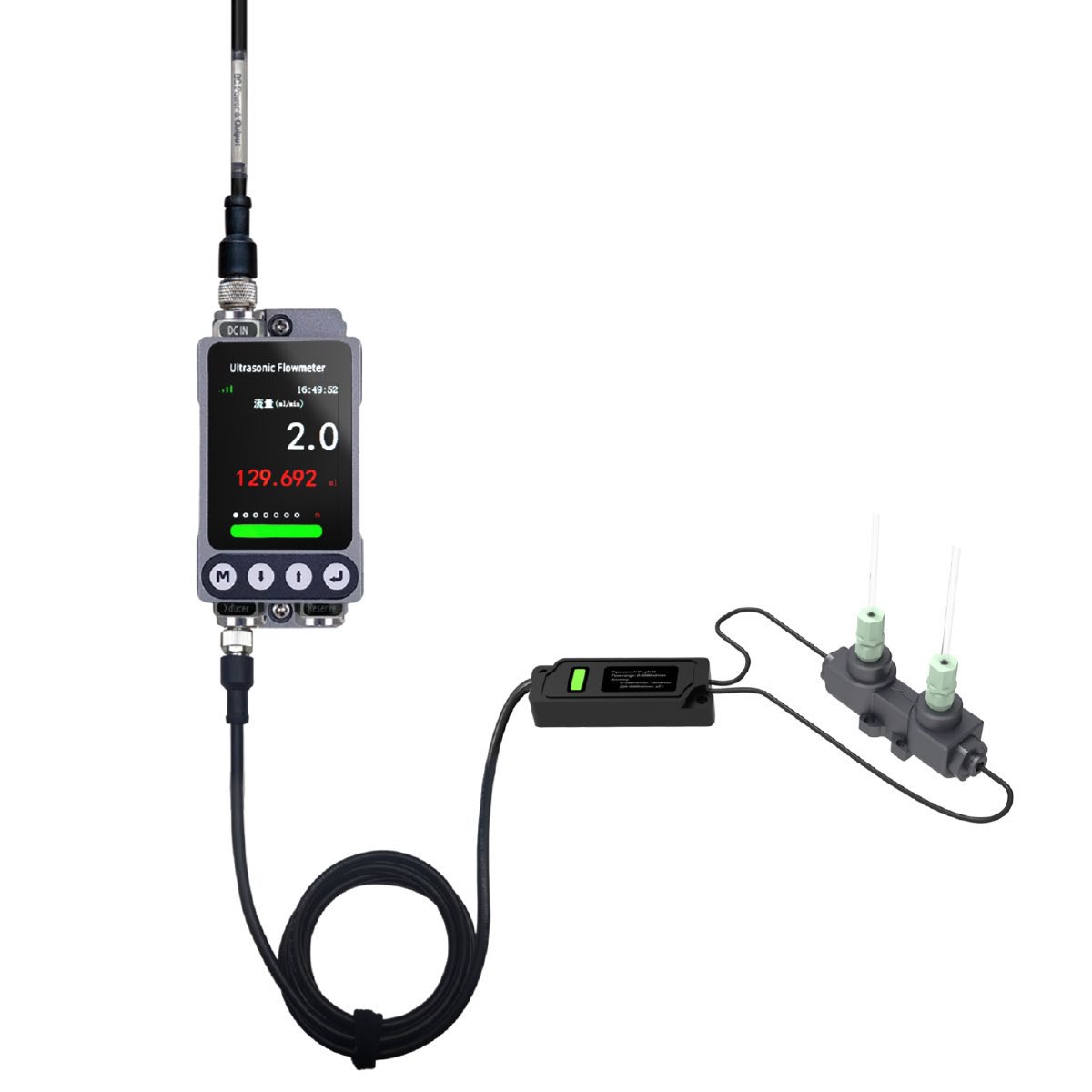
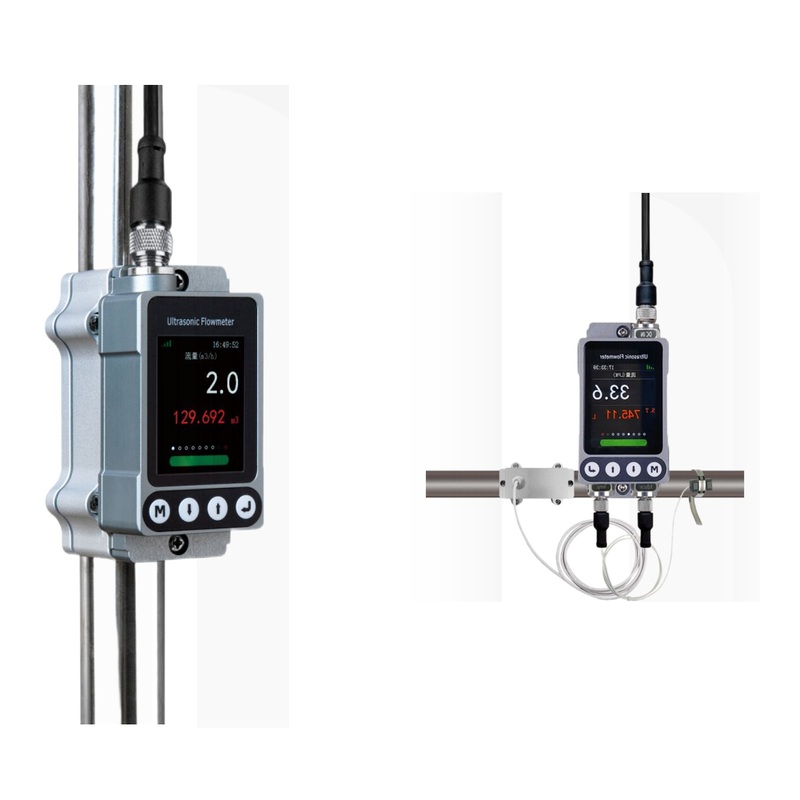
The FS-930 is a clamp-on transit-time ultrasonic flow meter that measures without contacting the process liquid. It is suited to clean liquids in compatible tubing where contamination control, zero wetted parts and fast installation are important.
Technical overview
Published configuration data
Values below describe catalog or typical configurations. The confirmed quotation and model code define the supplied specification.
- Accuracy
- ±2.0% at 0.3-5.0 m/s
- Velocity
- 0.1-5.0 m/s
- Response
- 500 ms
- Tube OD
- 9.53-110 mm
- Viscosity
- Below 300 cSt
- Communication
- RS485 Modbus RTU
Key characteristics
Why engineers consider FS-930
- No liquid contact
- No pipe cutting
- Magnetic sensor alignment
- Integrated and remote versions
Typical applications
Where it fits
- 01Semiconductor wet processing
- 02High-purity chemicals
- 03Biopharma tubing
- 04Corrosive liquid monitoring
Selection checklist
Confirm these conditions before ordering.
Sending this information helps CurioSens verify the measurement principle, materials, range and interface.
- 01Process medium and composition
- 02Minimum, normal and maximum measuring range
- 03Operating and sterilization temperature
- 04Operating pressure and pressure peaks
- 05Pipe or tube size and process connection
- 06Required output, power supply and control interface
Engineer-reviewed FAQ
Questions about FS-930
Application answers reviewed for compatibility, selection, installation and maintenance.
What key process parameters must be provided when requesting a custom flow meter quote?+
Obtaining an exact flow instrumentation quotation requires a complete profile of your operating conditions. Essential parameters include the fluid name, full-scale flow rate range, working temperature, and line pressure. For liquid systems, fluid viscosity and conductivity determine suitability for gear, electromagnetic, or ultrasonic technology. For gas mass flow systems, gas purity and composition are critical for calibration factors. Sensor materials, such as 316L stainless steel, UPVC, or PEEK, must match chemical compatibility. Standard configurations offer 4-20mA or RS485 Modbus RTU outputs. If process conditions fall outside standard specifications, this must be confirmed for the selected configuration. Please share your medium, flow range, pressure, temperature, viscosity, tube size, process connection, and required output for prompt pricing.
procurementShould I choose an inline flow meter or a clamp-on ultrasonic flow meter for corrosive fluids?+
Choosing between inline and clamp-on ultrasonic meters depends on maintenance access and installation preferences. Clamp-on flow meters like the FS-930 attach to the pipe exterior using magnetic clamps, eliminating process shut-downs, leak risks, and fluid contamination. Inline models like the FS-910 utilize pre-calibrated UPVC pipe segments, delivering 20ps time resolution and 1.0% accuracy for pipe outer diameters from 5mm to 12mm. While inline units provide defined flow geometry for micro-flows, clamp-on sensors handle lines up to DN100 or higher without pressure loss. Chemical resistance for inline wetted parts depends on concentration and temperature, so this must be confirmed for the selected configuration. Send your medium, flow range, pressure, temperature, viscosity, tube size, process connection, and required output to verify compatibility.
comparisonHow quickly can the FS-930 clamp-on ultrasonic flow meter be installed on active pipelines?+
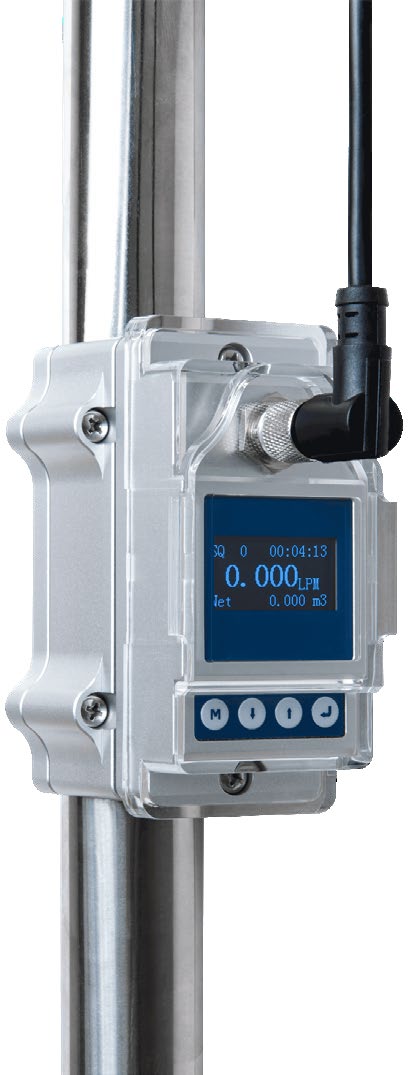
The FS-930 non-contact clamp-on ultrasonic flow meter simplifies temporary or permanent flow monitoring. Featuring a unique magnetic guide design, the upper and lower sensor clamps automatically align and lock onto pipes, enabling mounting completion in 2-3 minutes. It covers pipe outer diameters from 9.53 mm (DN6) up to 116 mm (DN100), with customizable large-diameter options up to DN250. Equipped with a 50ps time-resolution processing chip, it measures velocities from 0.1 m/s to 5.0 m/s with +/-2.0% accuracy. The host unit features an OLED screen, 4-20mA, RS485 Modbus RTU, and OCT alarm outputs. Pipe material sound speed parameters must be confirmed for the selected configuration. Submit your medium, flow range, pressure, temperature, viscosity, tube size, process connection, and required output for confirmation.
installationWhat is the key functional difference between the FS-930 and FS-950 clamp-on flow meters?+
While both the FS-930 and FS-950 share magnetic clamp-on mounting, non-contact measurement, and 2-3 minute setup, the FS-950 adds dedicated temperature sensing capabilities. The FS-950 split model includes an auxiliary temperature sensing wire to display real-time fluid temperature on its 2.4-inch OLED screen alongside flow velocity and totalized volume. Furthermore, the FS-950 split-type offers extended process temperature options up to 120°C, compared to 70°C max on the FS-930 split model. Standard integrated models for both series operate from -10°C to 50°C. Temperature sensor accuracy and thermal coupling grease requirements must be confirmed for the selected configuration. Provide your medium, flow range, pressure, temperature, viscosity, tube size, process connection, and required output to choose the right model.
comparisonWhen should a split-type clamp-on ultrasonic flow meter be chosen over an integrated model?+
Choosing between integrated and split-type clamp-on flow meters depends on display accessibility and thermal exposure. Integrated models combine the ultrasonic transducers and transmitter display into a single clamped housing, ideal for open, room-temperature piping (-10°C to 50°C). Split-type models like the FS-930 Split or FS-950 Split separate the magnetic transducer clamps from the display controller using a 2.0-meter interconnecting cable (extendable to 20m). This allows the display unit to be wall-mounted in convenient operating locations while transducers operate on process lines running up to 70°C (standard split) or 120°C (high-temp split). Cable routing and anti-corrosion shell options must be confirmed for the selected configuration. Send your medium, flow range, pressure, temperature, viscosity, tube size, process connection, and required output for guidance.
selectionWhat liquid viscosity limits apply to CurioSens transit-time ultrasonic flow meters?+
Transit-time ultrasonic measurement relies on high-frequency sound waves propagating across moving liquid streams. All standard CurioSens transit-time flow meters—including the FS-910 inline micro-flow meter, FS-920 industrial union meter, FS-930/FS-950 clamp-on series, and FS-9X tubing sensor—are specified for applicable liquid viscosities below 300 cSt (mm2/s). Liquids with higher viscosities, such as heavy oils or concentrated polymers, absorb sound energy and alter laminar velocity profiles, potentially reducing signal-to-noise ratios. For viscous liquids above 300 cSt, positive displacement gear meters like the FP-210 should be evaluated instead. Signal penetration in non-Newtonian liquids must be confirmed for the selected configuration. Share your medium, flow range, pressure, temperature, viscosity, tube size, process connection, and required output with our application engineers.
compatibilityDo clamp-on ultrasonic flow meters cause pressure drop or risk process fluid contamination?+
Clamp-on ultrasonic flow meters represent a non-invasive flow measurement solution. Because transducers clamp directly onto the outer wall of plastic or metal piping (such as FS-930, FS-950, or FS-9X), no internal components restrict fluid motion. This eliminates pressure loss across the meter, reducing pump energy requirements. Furthermore, because no wetted seals or internal sensors contact the liquid, process fluids remain completely free from cross-contamination, leaks, or bio-film accumulation. This non-contact design allows installation and servicing without interrupting active production. Acoustic signal coupling through multi-layer or insulated pipes must be confirmed for the selected configuration. Send your medium, flow range, pressure, temperature, viscosity, tube size, process connection, and required output for evaluation.
selectionHow do suspended solids or gas bubbles affect the accuracy of transit-time ultrasonic flow meters?+
Transit-time ultrasonic meters (such as the FS-910, FS-920, and FS-930) calculate flow by measuring time differences between upstream and downstream acoustic pulses. For accurate signal transmission, the liquid medium must be homogeneous. CurioSens transit-time meters tolerate minor particulate impurities or bubbles up to <= 4% concentration. Higher concentrations of entrained air, heavy slurries, or undissolved solids scatter acoustic beams, leading to degraded signal quality or temporary measurement drops. In aerated or heavy slurry applications, alternative technologies like Doppler ultrasonic or electromagnetic meters (FS-510) should be specified. Exact particle size and concentration thresholds must be confirmed for the selected configuration. Provide your medium, flow range, pressure, temperature, viscosity, tube size, process connection, and required output for assistance.
troubleshootingRelated instruments